August 2021

_the august│2021 edition of our Newsletter has the following highlight:

-The Family Business System’s Circles: Ownership, Family and Business.

-Brazilian Chamber of Deputies approves multiple voting shares through the Provisional Measure for the Improvement of the Business Environment, which proceeds to presidential approval

_The Family Business System’s Circles: Ownership, Family and Business.


Family Businesses can be fragile or resilient depending not only on their operational and strategic performance in their field of operation, but mainly on how the several parties involved in their corporate governance system align themselves and deal with the challenges and conflicts that may arise. In a nutshell, we can organize the Family Business System into three independent but partially overlapping subsystems: ownership, business, and family:
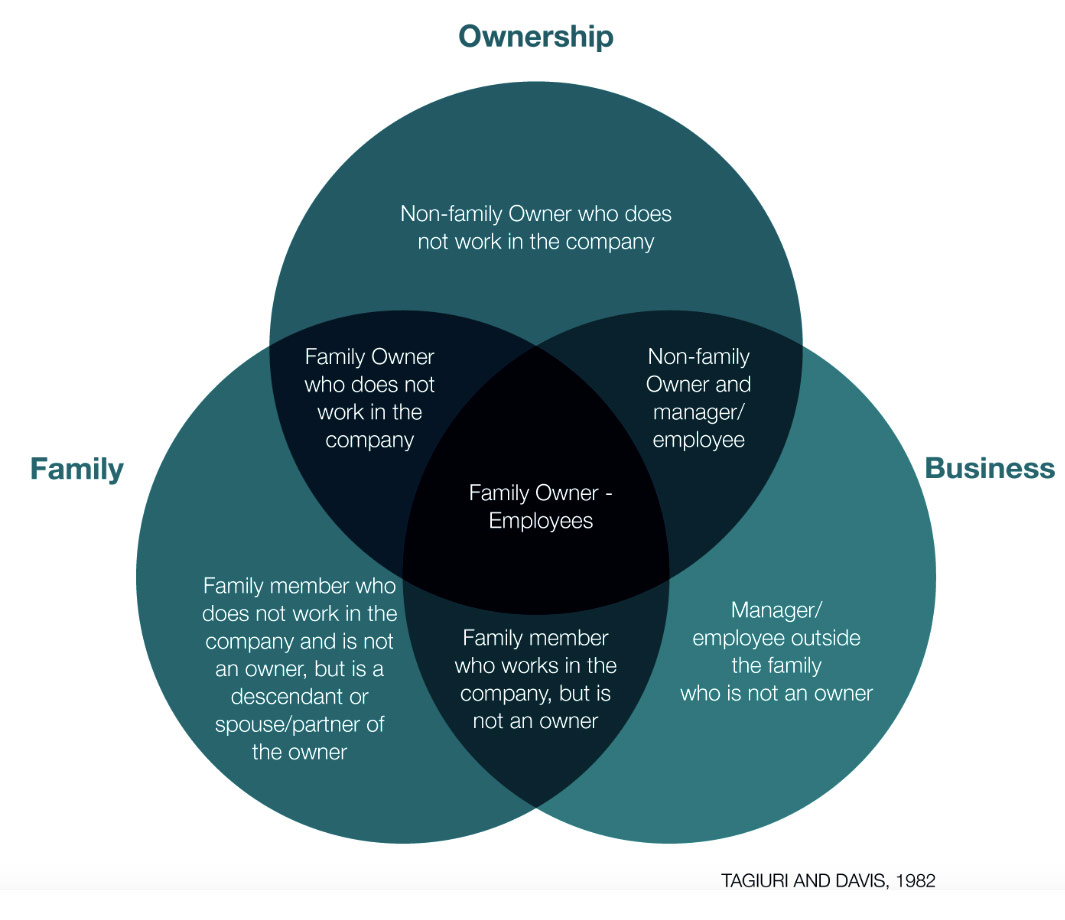
The Ownership Circle is occupied by all the individuals and legal entities that already have a shareholding interest in the company, whether this interest is a majority or a minority stake, bound or not to a shareholders’ agreement. Those are the people who are entitled to dividends and the approval for most relevant matters set forth in the Corporations Law.

However, members in the Business circle are managers and employees. This condition, unlike ownership, is not a direct consequence of succession, although in practice it is often confused with it.

The Family circle, in its turn, consists in all the people who are part of the corporate family. This circle is comprised of family members who may or may not be shareholders (or who may become shareholders in the future) and those who may or may not be involved in the management of the company.

By defining the position of each person in the system, it is possible to objectively identify the different perspectives, concerns, dilemmas, incentives, priorities, limits, and dynamics within the family business environment.

There is no right or wrong point of view. This model provides a neutral perspective of the situation, making it possible to mitigate potential conflicts between different groups. In addition, it helps to identify the source and reason of problems, as well as to outline possible solutions to impasses. For example, on one hand, a brother A, a family member owner with no position in the company, may conflict with brother B, a family member owner working in the company, because he believes that the dividends distributed were below his expectations and did not represent a reasonable return on his investment. On the other hand, Brother B may not understand Brother A’s frustration and believes that the distribution was fair, justifying the retention of profits with possible reinvestment in expansion.

By applying the model, the difference in the position of each of the brothers is evident and therefore easier to understand individual concerns. Each member of the system has a legitimate interest, and all must be respected, welcomed, and included as effectively as possible in the company’s decisions, rules, and policies. Besides the issue of profit allocation, some sensitive topics that take prominence refer to:

• shareholders preparation and succession;
• leadership succession, which is often concentrated on the founder in the first generation, whose replacement may occur gradually or abruptly;
• retirement age of family managers;
• choice of managers (family and external);
• family members hiring;
• support to family members in need;
• exit mechanisms for family members that do not want to remain in the company.

Each family business is unique, and in our work, we analyze its particularities in depth so that, together with the participants, we can create an appropriate corporate governance. The best time to discuss and define corporate governance is before it really becomes essential. Anticipating, in this case, can mean a valuable opportunity to discuss sensitive issues, converge interests, and provide the sincere commitment of all to the defined rules, in order to avoid conflicts that are harmful both to the company’s business and to family relations themselves.

For a family business to succeed, it is essential to have a solid union, which means being aligned on the fundamental values of where the company wants to go and how and what should be done to achieve this goal.


The text above was published in legislation and market session of Capital Aberto on July 21, 2021, and can be accessed in Portuguese through the link below:

https://tinyurl.com/pm2tejbk


1 The Three Circles Model of the Family Company System was developed by Renato Tagiuri and John Davis at Harvard Business School and was published in professional documents starting in 1978. It was published for the rst time in Davis’ PhD dissertation – The Inuence of Life Stages on Father-Son Work Relationships in Family Companies, in 1982. In 1996, the Family Business Review publication brought up the classic article by Tagiuri and Davis, “Bivalent Attributes of the Family Firm“

_ Brazilian Chamber of Deputies approves multiple voting shares through the Provisional Measure for the Improvement of the Business Environment, which proceeds to presidential approval


On August 5, 2021, the Chamber of Deputies approved Provisional Measure No. 1,040/2021, also known as the MP for the Improvement of the Business Environment, which gave rise to the Conversion Bill No. 15/2021, which awaits presidential approval.

The MP for the Improvement of the Business Environment provides for changes to encourage business in Brazil, which may improve Brazil’s position in the Doing Business ranking, including the possibility of granting common shares issued by companies the right of multiple voting, which allows a single share to be assigned more than one vote.

Currently, such mechanism is prohibited by the Brazilian corporate law, which adopts the principle that each common share corresponds to one vote in resolutions taken at shareholders’ meetings (Article 110 of Law No. 6,404/1976), although this is a right already known in the capital market of other countries, especially in the US, which has attracted Brazilian companies at the time of going public, since multiple voting shares allow original shareholders to maintain control of the companies without necessarily holding a majority of the share capital or without the need to enter into a shareholders’ agreement with a group of investors.

Pursuant to the wording of Conversion Bill No. 15/2021, it is intended to create one or more classes of common shares with multiple voting rights up to ten votes per share with a term of validity of up to seven years, which may be renewed, subject to some restrictions for its creation.

Any stock company (sociedade por ações) may approve the creation of shares with attribution of the multiple vote, subject to the protections provided for in the project, except for publicly-held companies that already have shares traded on organized markets, which are excluded from the proposed wording. However, the text authorizes publicly-held companies to have shares with a multiple voting rights, if they have created such class of shares before their IPO.

It has been discussed whether the implementation of the multiple voting shares in Brazil via a provisional measure would be the ideal path, since such a change in the current system should be preceded by a broad and effective debate. In this sense, while the plural vote allows its holder to maintain greater influence in decisions than its effective participation in the capital stock, a situation that is relevant in certain companies that debut their participation in the capital market in which the figure of the controlling shareholder often has a weight and a value recognized by investors, it is also necessary to have safeguards to protect investors.


We contributed on the subject in the article “Voto plural chega ao Brasil” in “Legislação & Mercados” session of Capital Aberto published on August 17, 2021, which can be accessed in Portuguese through the link below:

https://tinyurl.com/twmtv32k

August 2020

_the August│2020 edition of our Newsletter has the following highlights:

– Brazilian National Department of Business Registration issues Circular Letter regarding electronic signatures

– Bill proposes the issuance of debentures by limited liability companies and cooperatives

– STF decides to maintain ITBI assessment on real estate’s contributions regarding the amount exceeding the capital to be paid up

_ Brazilian National Department of Business Registration issues Circular Letter regarding electronic signatures


On August 11th, 2020, the Brazilian National Department of Business Registration and Integration (Departamento Nacional de Registro Empresarial e Integração – DREI) issued the Circular Letter SEI No. 2563/2020/ME, which establishes the department’s understanding regarding electronic signatures, which must be followed by all Boards of Trade of the country. This matter was addressed by DREI after entities operating in the area questioned the department dabout the divergence of understanding on the specificities that should be followed for electronic signature of documents by Boards of Trade throughout the country.


Initially, DREI pointed out that Provisional Measure No. 2200-2 of 2001, which created the Brazilian Public Key Infrastructure (Infraestrutura de Chaves Públicas Brasileira – ICP-Brasil), does not prevent the use of other means of proof of authorship and integrity of documents in electronic form other than those of ICP-Brasil. Moreover, with the publication of Provisional Measure No. 983 in June 2020, which regulates, among other matters, electronic signatures in communications with public entities, electronic signatures were categorized as follows:


  • simple: allows the identification of the signatory and attaches or associates data with other data in electronic format.
  • advanced: is uniquely associated with the signatory, uses data to create an electronic signature whose signatory can, with a high level of certainty, operate under its exclusive control, and is related to the data associated with it in such a way that any subsequent modification is detectable.
  • qualified: uses a digital certificate, pursuant to Provisional Measure No. 2200-2.


Furthermore, article 3 of Provisional Measure No. 983 expressly provides for the possibility of using the advanced electronic signature in the registration of acts before Boards of Trade, aside from, of course, the qualified electronic signature.


THUS, THERE BEING NO OBSTACLE FOR THE ACCEPTANCE OF ADVANCED AND QUALIFIED ELECTRONIC SIGNATURES BY BOARDS OF TRADE, THE AUTHENTICITY AND INTEGRITY OF THE DOCUMENTS IS GUARANTEED, SO THERE IS NO NEED TO CHECK ALL DOCUMENTS, BECAUSE THE VERACITY AND CONFIRMATION OF INFORMATION IS THE SIGNATORY’S SOLE RESPONSIBILITY.


Finally, in case of printing digital documents, the authenticity of the document may occur by means of authentication by the lawyer, accountant or accounting technician of the interested party, as the printed document becomes a simple copy.


More information may be accessed in Portuguese through the link below:

https://sei.fazenda.gov.br/sei/controlador_externo.php?acao=documento_conferir&codigo_verificador=9527270&codigo_crc=E39836DB&hash_download=a9ef7f48a561aafc79d260ef891d3f3536846abc5c7f7856e5b934a5adfe379ba486ea9428c5c45e2bf8101b5d7e5227dd45a77008266c0ba0591d89f6f1c9cd&visualizacao=1&id_orgao_acesso_externo=0


_ Bill proposes issuance of debentures by limited liability companies and cooperatives


In June 2020, Senator Flávio Bolsonaro presented Bill No. 3324/2020 (“PL 3324/20“), which allows the issuance of debentures by limited liability companies and cooperatives. The explanation presented to the Brazilian Federal Senate points out the need to expand the forms of fundraising by these corporate types as a result of the COVID-19 pandemic.


ALTHOUGH THERE IS NO LEGAL PROHIBITION FOR THE ISSUANCE OF DEBENTURES BY SUCH CORPORATE TYPES UNDER BRAZILIAN LAW, SOME LOCAL BOARDS OF TRADE DO NOT ACCEPT THE FILING OF THESE SECURITIES, WHICH MAKES THEIR ISSUANCE IMPOSSIBLE. IN THIS SENSE, THE EXISTENCE OF A SPECIFIC LAW ON THE MATTER WILL FACILITATE THE ACCESS OF SMALL AND MEDIUM COMPANIES TO CREDIT AT A NATIONAL LEVEL.


There are other bills in progress in the Legislative on the same matter, such as Bill No. 6322/2013, proposed by Federal Congressman Carlos Bezerra, and Senate Bill No. 11/2018, proposed by the Joint Commission of Debureaucratization of the Brazilian National Congress. The matter is also dealt with by the two projects of a New Brazilian Commercial Code. However, there is a certain expectation that this matter will be treated by Congress with greater vehemence given the health and economic crisis in which the country finds itself, as it is an additional way of financing the local business activities.


It is ought to be said that, currently, debentures have great relevance in the national capital market, being a consolidated debt security in the country. The formal possibility to issue debentures by limited liability companies, which is the legal structure most Brazilian companies have, would provide considerable legal security for the issuer and debenture holder.


Bill No. 3324/20 is currently in progress in the Federal Senate. More information can be accessed in Portuguese through the link below:


https://www25.senado.leg.br/web/atividade/materias/-/materia/142510


_ STF decides to maintain ITBI assessment on real estate’s contributions regarding the amount exceeding the capital to be paid up


On August 5, 2020, the Superior Federal Court (“STF”) judged Extraordinary Appeal No. 796376 and decided, by majority of votes, to maintain the assessment of the Real Estate Transfer Tax (Imposto de Transmissão de Bens Imóveis – ITBI) on real estate’s contributions to capital stock in the amount that exceeds the capital to be paid up.


Pursuant to article 156, item II, of the Federal Constitution, the municipalities may impose taxes on the transmission “inter vivos”, under any title, by onerous act, of real estate and real rights over real estate, except for guarantee, as well as assignment of rights to its acquisition. However, paragraph 2, item I of the aforementioned article, provides immunity for the transfer of assets or rights contributed to a society by means of payment of the capital, as well as for the transfer of assets or rights resulting from a merger, incorporation, spin-off or extinction of any legal entity, unless, in such cases, the acquirer’s predominant activity is the purchase and sale of these assets or rights, lease of real estate or leasing.


The case judged by STF arises from a capital increase of a company with the subsequent use of real estates to pay up the subscribed capital stock. However, the total value of the real estates exceeded the pending capital payment amount, so the excess amount was allocated to the company’s capital reserve. When trying to issue the document for payment of the ITBI with full immunity, the company was surprised with the understanding of the secretary of the municipal finance that the ITBI should be paid on the amount allocated to the capital reserve (which exceeded the pending capital payment amount).


The plaintiff filed a writ of mandamus against such act issued by the secretary of finance of São João Batista, in the State of Santa Catarina, who denied the immunity aforementioned, stating that the total amount of the properties would greatly exceed the paid-in capital. Subsequently, the first-degree court recognized the immunity and waived the ITBI charge. However, the Santa Catarina Court of Justice granted an appeal filed by the municipality alleging that the immunity is restricted to the amount which is destined to the company’s capital stock.


In the STF, the appellant stated that no tax is levied on the transfer of assets incorporated into the equity of a legal entity, since there are no limitations regarding the ITBI’s immunity in the realization of capital. However, by majority, the STF ministers voted to maintain the incidence of ITBI on the amount that exceeded the value allocated to the capital stock, claiming that it cannot be admitted that, under the pretext of creating a capital reserve, it could be granted immunity over the value of properties in excess to the subscribed quotas, which is contrary to the constitutional norm and to the detriment of the municipal tax authorities.


Finally, the general repercussion thesis was set as follows: The immunity in relation to ITBI, provided for in item I of paragraph 2 of article 156 of the Federal Constitution, does not reach the value of the assets which exceeds the limit of the  capital stock to be paid in.


More information regarding RE 796376 can be accessed, in Portuguese, at the link below:


http://portal.stf.jus.br/processos/detalhe.asp?incidente=4529914

August 2019

_ the August │ 2019 edition of our Newsletter has the following highlights:

– New Provisional Measure allows publications imposed by the Brazilian Corporation Law in the internet

– Brazilian Securities and Exchange Commission acquits Investor Relations Officer for not disclosing a relevant fact

– Controversy regarding article 115 of the Brazilian Corporation Law proposal presented by the Brazilian Bar Association

_ New Provisional Measure allows publications imposed by the Brazilian Corporation Law in the internet

On August 5th, 2019, the Provisional Measure No. 892 (“MP 892”) regarding mandatory corporate publications was published, which amends article 289 of Law No. 6,404, of December 15, 1976 (“Brazilian Corporation Law“), in order to establish a new system for publications made by closely and publicly-held companies.

According to the new wording of article 289 of the Brazilian Corporation Law, the publications of publicly-held companies shall be made in the Brazilian Securities and Exchange Commission’s website, as well as in the website of the applicable stock exchange entity.

The Brazilian Securities and Exchange Commission (“CVM”) shall release a specific regulation regarding the provisions of article 289 of the Brazilian Corporation Law, which shall establish the acts and publications that must be filed before the Board of Trade. Closely-held companies’ publications and disclosure are subject to a normative act of the Brazilian Minister of Economy (“Regulation”). Either way, according to MP 892, mandatory publications shall not be charged. 

However, even though MP 892 is already in force, its article 5 sets forth that its provisions will only be effective on the first day of the month following the publication of the normative acts regarding the Regulation, which means MP 892’s effectiveness is conditioned, at first, to the publication of the Regulation

In addition, a provisional measure is a type of normative ruling that needs to be converted into law by the National Congress, otherwise it may lose its effectiveness. In case MP 892 is not analyzed by the National Congress within 60 days of its release, which may be extended once for the same period, it may lose its effectiveness and article 289 of the Brazilian Corporations Law will not be amended.

MP 892 can be accessed in Portuguese at:

http://www.planalto.gov.br/ccivil_03/_ato2019-2022/2019/Mpv/mpv892.htm

_ Brazilian Securities and Exchange Commission acquits Investor Relations Officer for not disclosing a relevant fact

On July 9th, 2019, the CVM’s Board decided, within the scope of Administrative Proceedings No. RJ2016/7190 (“Administrative Proceeding”), on the responsibility of an Investor Relations Officer for the non-disclosure of a relevant fact regarding the arbitration proceeding decision of a publicly-held company.

According to the accusation, the DRI failed to comply with the provisions of Article 157, paragraph 4, of the Brazilian Corporation Law and Articles 3 and 6, sole paragraph, of CVM’s Normative Ruling No. 358/2002 (“ICVM 358”), which establish the obligation to disclose acts or facts that are considered relevant to the business and decisions of publicly-held companies’ investors.  

The defense argued that the disclosure was not made, at first, because of the confidentiality of the arbitration proceeding, and the information regarding the conviction was not relevant, since the decision did not have a significant financial impact to the company.

In addition, the defense claimed that the non-disclosure of the information did not influence company’s investors’ decisions regarding the purchase and sale of securities or in the decision to exercise any of their rights. 

The Board’s Reporting Officer, Gustavo Machado Gonzales, stated in his vote that the definition of relevant information is open on purpose, and its application involves a complex and subjective judgement, which means it is possible to have a discrepancy regarding the actual relevance of a particular information to be disclosed.

According to the Reporting Officer, even though he understood the aforementioned information was relevant, there was no breach of the Brazilian Corporation Law and ICVM 358, since the choice not to disclose the information was supported on reasonable grounds. Therefore, CVM’s Board unanimously decided to discharge the DRI.

Additional information regarding the Administrative Proceeding can be accessed in Portuguese at:

http://www.cvm.gov.br/export/sites/cvm/noticias/anexos/2019/20190709_PAS_CVM_RJ2016_7190_voto_diretor_Gustavo_Gonzalez.pdf

http://www.cvm.gov.br/export/sites/cvm/noticias/anexos/2019/20190709_PAS_CVM_RJ2016_7190_relatorio_diretor_Gustavo_Gonzalez.pdf

_ Controversy regarding article 115 of the Brazilian Corporation Law proposal presented by the Brazilian Bar Association

The Brazilian Bar Association’s corporate law special committee included, in the Provisional Measure 881/2019 (“MP 881”), a new wording for Article 115 of the Brazilian Corporation Law regarding the possibility of shareholders voting in situations of conflict of interest.

Currently, CVM’s prevailing understanding is that the controlling shareholder is previously prevented from voting in general meetings that discuss situations of conflicting interests, also known as “formal conflict”.

The suggested amendment would authorize the controlling shareholder to vote in the event of a potential conflict, provided that such voting is in good faith. In this case, if any benefit was subsequently proved in favor of the controlling shareholder due to his vote, it would be considered void.

According to the special committee’s members, the purpose of the proposed amendment is to provide legal certainty to investors, since it is still hard to identify conflict of interest in certain situations.

On August 9th, 2019, the Brazilian Institute of Corporate Governance (“IBGC”) released a statement expressing its disagreement with the aforementioned proposal presented by the Brazilian Bar Association, because, in its opinion, the exclusion of this restriction and the authorization to vote in situations of conflict of interest, even if potential, are opposite to the best practices of corporative governance and would expose minority shareholders to situations of vulnerability.

In addition, the Capital Market Investors Association (“Amec”), also contrary to such proposal, stated that they agree with the clarification of doubts regarding the application of Article 115 of the Brazilian Corporation Law through debates and further discussions, considering the complexity and relevance of the issue. 

After the disapproval by associations that operate in the area and all controversy and complexity involved in this matter, the amendment to Article 115 of the Brazilian Corporation Law was removed from MP 881, which is still in discussion by the National Congress.